
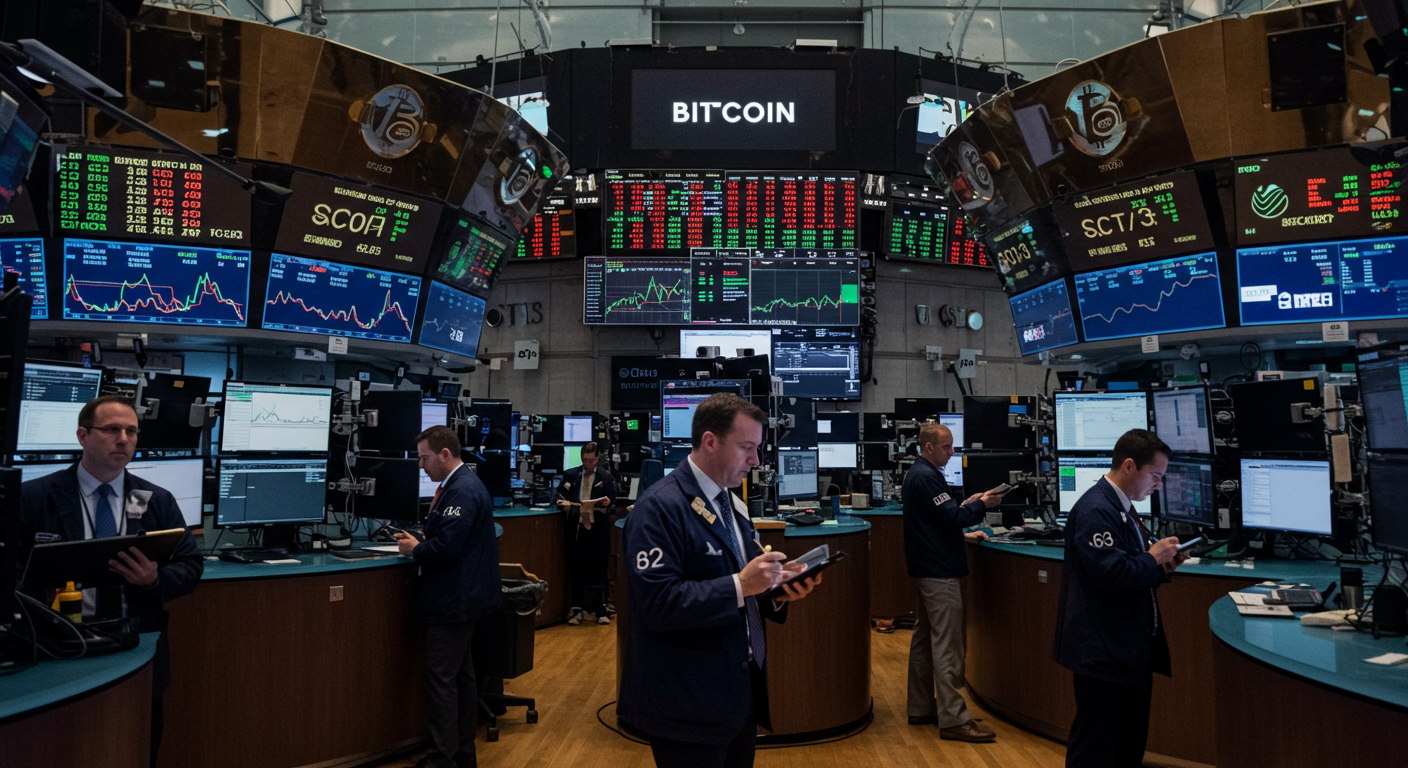
How Bitcoin ETFs Are Changing the Global Crypto Landscape in 2025
- Posted on: July 25, 2025
Introduction
In 2025, Bitcoin exchange-traded funds (ETFs) have moved from novelty to necessity in the portfolios of global investors. What began as a cautious regulatory experiment in the U.S. has blossomed into a full-fledged investment revolution, reshaping the crypto landscape and expanding institutional adoption across the globe. From Wall Street to West Africa, Bitcoin ETFs are opening new doors, offering legitimacy, liquidity, and a bridge between traditional finance and decentralized innovation.
What Are Bitcoin ETFs?
A Bitcoin ETF is a publicly traded fund that tracks the price of Bitcoin, allowing investors to gain exposure to the asset without needing to directly purchase or store it. Instead of managing private keys or worrying about custodial security, investors can simply buy shares of the ETF through traditional brokerage accounts.
This structure has major appeal for:
Institutional investors like pension funds and hedge funds
Retail investors who want regulatory clarity
Emerging markets seeking safer access to crypto assets
2025: The Year of Institutional Embrace
With the approval of multiple spot Bitcoin ETFs in the United States, Canada, Europe, and parts of Asia by 2024, 2025 has seen explosive growth in Bitcoin ETF trading volume. Major financial institutions such as BlackRock, Fidelity, and Vanguard now offer Bitcoin ETFs, and their entry into the space has accelerated mainstream adoption.
Key 2025 stats:
Over $100 billion in assets under management (AUM) in global Bitcoin ETFs
Bitcoin ETF inflows regularly exceed gold ETF inflows in weekly performance reports
African wealth management firms and fintech startups now offer ETF-linked crypto products
Impact on Global Crypto Markets
1. Increased Liquidity and Price Stability
Bitcoin ETFs have brought billions in capital into the crypto space. This increased liquidity helps reduce price volatility, making Bitcoin a more attractive asset for long-term holders and conservative investors.
2. Boost in Market Confidence
ETFs are heavily regulated and transparent, which has helped rebuild trust in the crypto sector post-FTX and other past scandals. Institutional investors view Bitcoin ETFs as a safer vehicle to gain exposure to digital assets, boosting confidence across all investor tiers.
3. Regulatory Standardization
The launch of ETFs has led to improved global coordination on crypto regulation. Countries that were once skeptical of digital assets are now building legal frameworks to support ETF infrastructure and adoption.
What This Means for Africa
a. More Secure Access to Bitcoin
For African traders and investors, Bitcoin ETFs represent a game-changer. Rather than dealing with peer-to-peer exchanges or unstable local crypto platforms, they can now gain exposure through regulated financial institutions.
b. Cross-Border Investment Opportunities
With Bitcoin ETFs available on global stock exchanges, African investors can now diversify internationally, using platforms that support ETF access—even in countries with strict foreign exchange policies.
c. Inspiration for Local Innovation
The success of ETFs has sparked local efforts to build Africa-focused crypto investment vehicles. In Nigeria, Ghana, and Kenya, fintech startups are exploring blockchain ETFs, stablecoin baskets, and tokenized asset funds.
Challenges Still Remain
Limited ETF access in African stock markets
Currency conversion hurdles and capital control laws
Education gaps among retail investors
Nonetheless, the momentum is strong. Regulators and financial institutions across Africa are beginning to assess how to safely integrate Bitcoin ETFs into local markets.
The Road Ahead: Democratizing Bitcoin Exposure
As Bitcoin ETFs become more widespread and diverse (some now include staking rewards or AI-powered trading strategies), the gap between traditional finance and crypto continues to narrow. For the global south—particularly Africa—this means greater access to wealth-building tools once reserved for a privileged few.
In the long run, Bitcoin ETFs could help stabilize local economies, attract global investment, and legitimize digital assets across the continent.
The rise of Bitcoin ETFs in 2025 is more than just a regulatory milestone—it’s a global financial transformation. With billions in institutional capital flowing in, increased security for investors, and growing accessibility across continents, ETFs are redefining how the world interacts with Bitcoin. For African investors and fintech pioneers, this is an invitation to build, grow, and participate in a truly global crypto economy.
EootleX is dedicated to helping African users understand and thrive in this new financial landscape. Stay tuned to our blog for more updates on crypto trends, tools, and technologies shaping the future.