
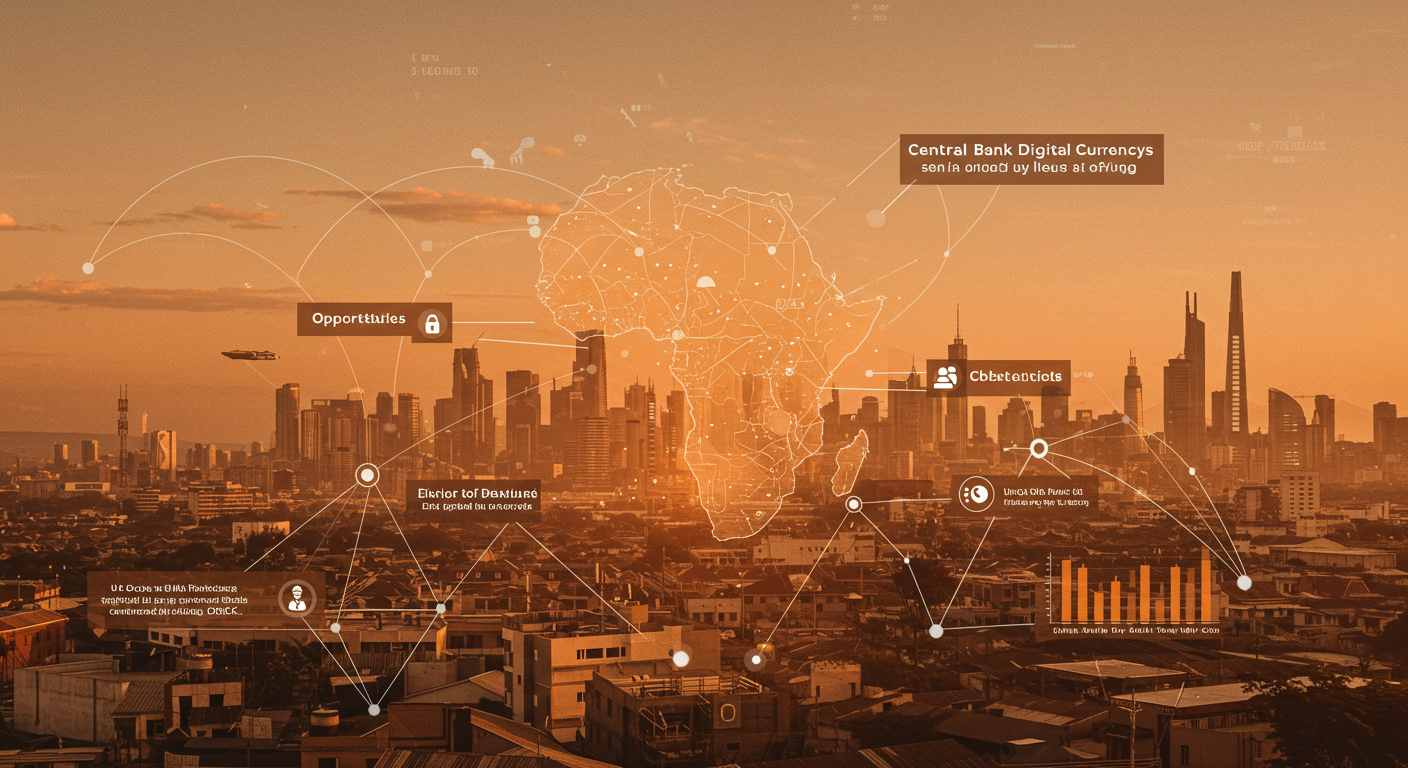
Central Bank Digital Currencies (CBDCs) in Africa: Opportunity or Threat
- Posted on: August 3, 2025
Across the African continent, governments and central banks are actively exploring or piloting Central Bank Digital Currencies (CBDCs). These state-backed digital assets represent a bold step toward digitizing national currencies in a world increasingly leaning into decentralized finance (DeFi), blockchain, and crypto assets. But while CBDCs offer some clear advantages for financial inclusion and monetary control, their implications for private crypto platforms and the broader fintech ecosystem are far from straightforward.
So, what exactly are CBDCs? Why are African countries exploring them? And more importantly, do they pose a threat or present an opportunity to existing crypto traders, businesses, and platforms like EootleX?
What Are CBDCs?
CBDCs are digital forms of a country’s fiat currency issued and regulated by its central bank. Unlike decentralized cryptocurrencies like Bitcoin or Ethereum, CBDCs are centralized, government-controlled, and designed to complement or even replace physical cash.
There are two types:
Retail CBDCs for use by the general public.
Wholesale CBDCs intended for institutional banking and interbank transactions.
The African CBDC Landscape (2025)
Several African nations have either launched or are in the process of testing their own CBDCs:
Nigeria: The eNaira, launched in 2021, was Africa’s first CBDC. While initial adoption was slow, recent regulatory updates and integrations with banking and fintech services are reviving interest.
South Africa: Piloting a wholesale CBDC under Project Khokha, aiming to improve financial infrastructure for cross-border payments.
Ghana: Testing the e-Cedi to enable digital payments and reduce reliance on cash.
Tunisia, Morocco, and Kenya: Exploring feasibility studies and small-scale pilots.
CBDCs vs. Private Crypto Platforms: Clash or Collaboration?
For platforms like EootleX and other African crypto exchanges or DeFi projects, CBDCs come with mixed implications:
🚀 Opportunities
Financial Inclusion Boost
CBDCs aim to bring unbanked populations into the formal economy. This creates a broader digital-first audience already familiar with crypto-like interfaces—opening the door for easier onboarding into private platforms.
Improved On/Off Ramps
Integration between CBDCs and crypto platforms could streamline fiat-crypto conversions, reduce transaction costs, and create more stable trading infrastructure.
Legitimacy and Trust
Government involvement in digital currency can help demystify digital assets and reduce the stigma around crypto, building public trust.
Cross-Border Transactions
A pan-African network of interoperable CBDCs could make remittances and cross-border payments cheaper and faster—an area where crypto platforms can collaborate.
⚠️ Threats
Increased Government Control
CBDCs are programmable, meaning governments can enforce limits, freeze funds, or track spending—reducing financial autonomy that crypto users value.
Regulatory Squeeze
With CBDCs in play, governments may tighten restrictions on private cryptocurrencies to encourage adoption of their own tokens—this could affect trading volumes, innovation, and user freedom.
Competition for Market Share
Central banks may offer cheaper or even free transaction options, posing a challenge for crypto platforms that charge fees for trading or withdrawals.
A Balanced Future? Coexistence Is Key
The future of digital finance in Africa likely won’t be a winner-takes-all scenario. Instead, a hybrid system may emerge, where:
CBDCs serve as a government-backed stable digital currency.
Private crypto platforms innovate in areas like staking, NFTs, tokenized real-world assets, DeFi lending, and global investments.
By integrating CBDC payment options, developing regulated on/off ramps, and maintaining strong security and transparency standards, platforms like EootleX can coexist and even thrive alongside CBDCs.
CBDCs in Africa are not inherently a threat or a savior—they’re a tool. For crypto platforms, the key lies in adaptation. Understanding how these government-backed assets function, aligning with evolving regulations, and staying agile will define whether they become stepping stones or stumbling blocks in the journey toward a truly digital African economy.
The most successful players will be those who see CBDCs not as competition, but as part of a larger ecosystem—one that includes public, private, centralized, and decentralized elements all working together to redefine money in Africa.