
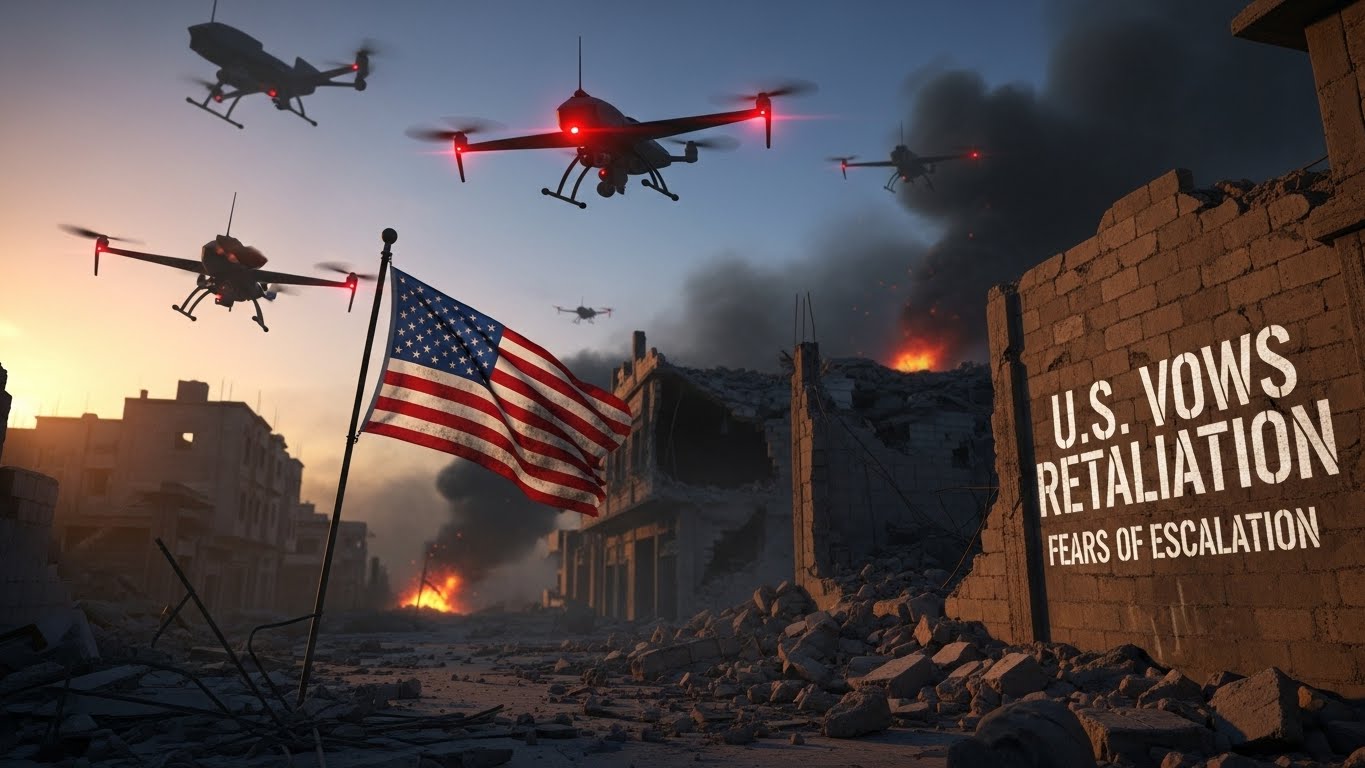
U.S. Vows Retaliation in Syria After Deadly Attacks, Raising Fears of Regional Escalation
- Posted on: December 14, 2025
U.S. Vows Retaliation in Syria After Deadly Attacks, Raising Fears of Regional Escalation
Tensions in the Middle East are rising after the United States vowed retaliation following deadly attacks in Syria that killed two U.S. soldiers and an American interpreter. The incident has drawn strong reactions from Washington and renewed concerns about security, stability, and the risk of further conflict in the region.
What Happened in Syria
According to U.S. officials, American forces stationed in Syria were targeted in a series of attacks that resulted in the deaths of two service members and a civilian interpreter working alongside them. The attacks occurred amid ongoing instability in parts of Syria, where multiple armed groups operate and foreign forces remain present.
While investigations are still underway, the incident has been described as a serious escalation and a direct threat to U.S. personnel.
The U.S. Response
In response, the U.S. president strongly condemned the attacks and promised decisive action against those responsible. U.S. leaders emphasized that attacks on American forces would not be tolerated and that measures would be taken to protect personnel and deter future violence.
Such statements signal the possibility of military or strategic responses, which could increase tensions in an already volatile region.
Why U.S. Troops Are in Syria
U.S. forces have been stationed in Syria primarily to combat extremist groups and support regional security efforts. Although the scale of U.S. involvement has changed over time, American troops continue to play a role in counterterrorism operations and in assisting local partners.
Their presence, however, has long been controversial and has made them targets for hostile groups.
Regional and Global Concerns
The deaths have sparked concern among international observers, who worry that retaliation could lead to wider conflict. The Middle East is already facing multiple crises, and any escalation risks drawing in additional actors and worsening humanitarian conditions.
Allies of the U.S. have expressed solidarity, while calling for careful decision-making to avoid further instability.
What Happens Next?
As the U.S. considers its response, analysts stress the importance of balancing security with diplomacy. Retaliation could deter future attacks, but it could also provoke further violence if not carefully managed.
The coming days will be critical in shaping the direction of U.S. involvement in Syria and the broader regional situation.
The killing of U.S. soldiers and an American interpreter in Syria marks a tragic moment with serious geopolitical implications. As the U.S. vows retaliation, the world is watching closely to see how events unfold and whether tensions in the Middle East can be contained or are set to escalate further.