
Bus Crash in Indonesia: Tragedy Claims Lives and Raises Road Safety Concerns
- Posted on: December 22, 2025
Bus Crash in Indonesia: Tragedy Claims Lives and Raises Road Safety Concerns
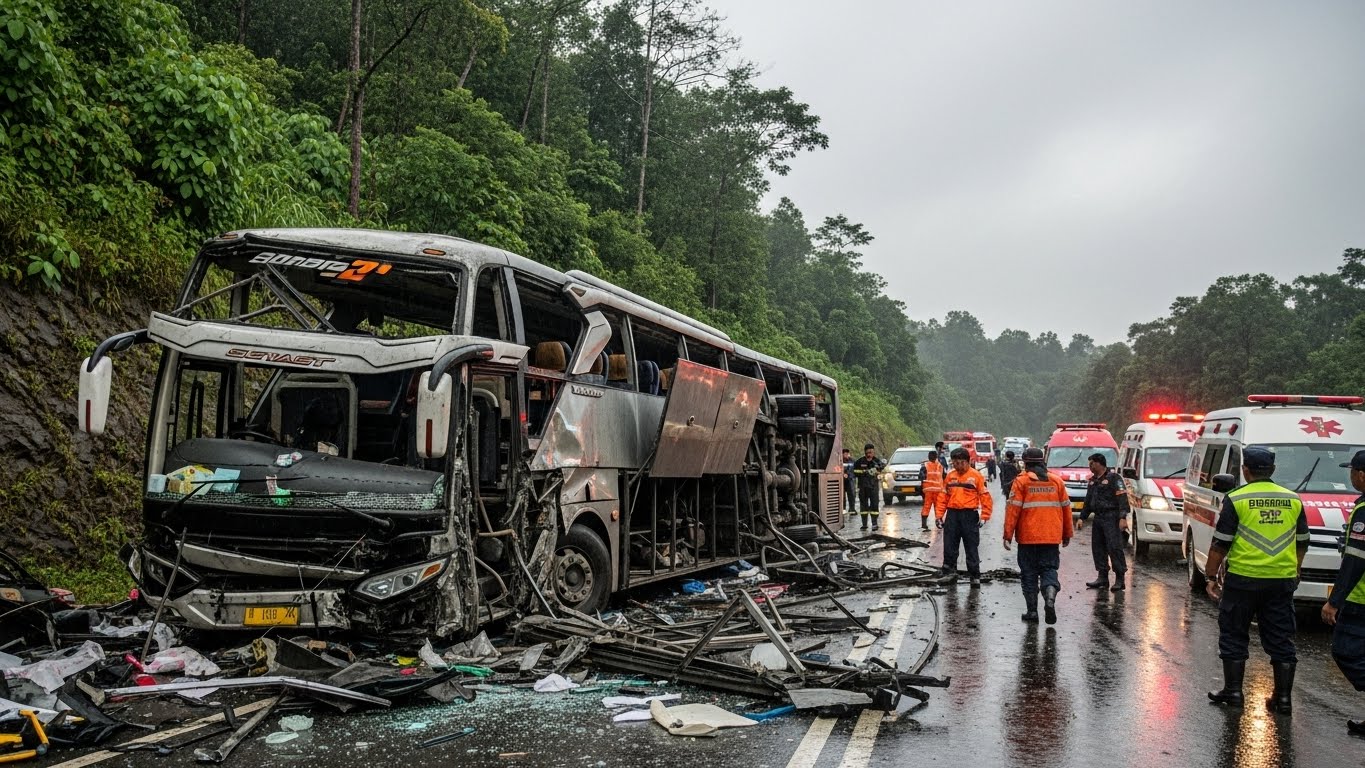
Indonesia is mourning after a passenger bus crash killed at least 16 people, with many others injured, triggering large-scale rescue operations and an official investigation. The devastating incident has once again drawn attention to persistent road safety challenges across the country’s vast transport network.
What Happened
According to authorities, the bus was traveling on a major route when it crashed under circumstances that remain under investigation. Emergency services rushed to the scene, working for hours to extract victims from the wreckage and transport the injured to nearby hospitals. Some passengers were reported to be in critical condition, overwhelming local medical facilities.
Officials have not yet confirmed the exact cause, but speed, mechanical failure, driver fatigue, and road conditions are among the factors being examined.
Families in Mourning
As news spread, families gathered at hospitals and police stations seeking information about loved ones. For many, the wait ended in heartbreak. Community leaders and government officials expressed condolences, while support teams were mobilized to assist grieving families with counseling and burial arrangements.
In Indonesia, long-distance buses are a lifeline for millions—especially during holiday travel periods—making such tragedies deeply personal and widely felt.
A Recurring Safety Issue
Bus crashes are an all-too-familiar headline in Indonesia. The country’s challenging terrain, aging vehicles, inconsistent enforcement of safety regulations, and long overnight journeys contribute to heightened risks. Advocacy groups have repeatedly called for:
Stricter vehicle inspections
Enforcement of speed limits and rest periods for drivers
Improved road infrastructure, especially in rural and mountainous areas
Passenger safety awareness, including seatbelt use where available
Each fatal accident renews calls for reform, yet progress has been uneven.
Government Response and Investigation
Authorities have launched a full investigation to determine accountability. If negligence or regulatory violations are found, officials say legal action will follow. Transport regulators have also promised renewed inspections of bus operators in the region.
However, critics argue that reactive measures after tragedies are not enough. Sustained oversight and investment, they say, are essential to prevent future loss of life.
Looking Ahead
The latest bus crash serves as a stark reminder of the human cost of road safety failures. Beyond statistics, it represents lives cut short and families forever changed. As Indonesia continues to modernize its transport system, the hope is that this tragedy will spur lasting reforms—turning grief into a catalyst for safer roads and stronger accountability.
For now, the nation pauses to remember the victims and to demand answers that could help prevent the next disaster.