
U.S.–Nigeria Airstrike Fallout: Intelligence Cooperation Sparks Support and Controversy
- Posted on: December 27, 2025
U.S.–Nigeria Airstrike Fallout: Intelligence Cooperation Sparks Support and Controversy
Nigeria has confirmed that it provided intelligence support for recent U.S. airstrikes targeting Islamic State (IS) militants, a revelation that has intensified debate both domestically and internationally. While U.S. officials have warned that further military actions may follow, the development has drawn mixed reactions—ranging from strong support for counterterrorism cooperation to concerns over sovereignty, civilian safety, and long-term consequences.
The Strikes and Nigeria’s Confirmation
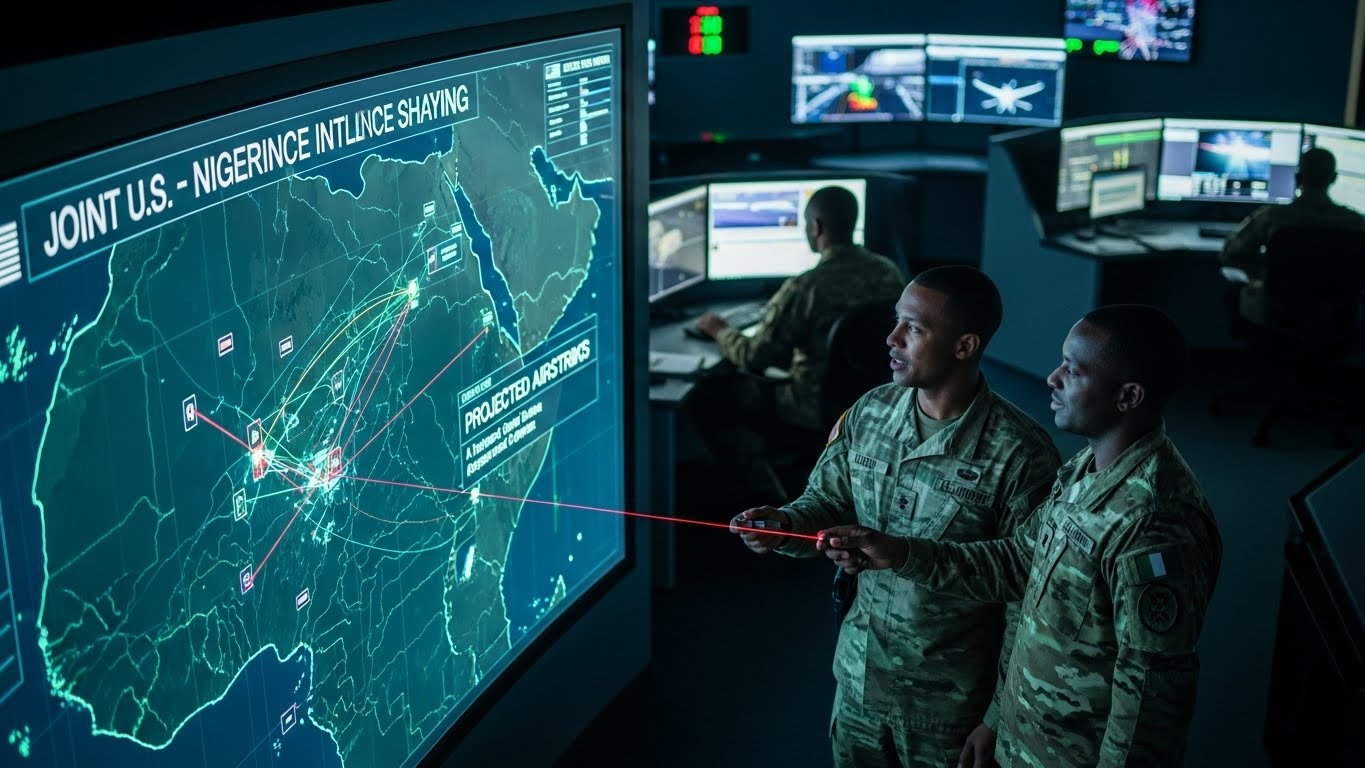
The airstrikes, carried out by U.S. forces, reportedly targeted Islamic State-linked militants operating in parts of northern Nigeria. Following the operation, Nigerian authorities acknowledged that intelligence shared by local security agencies played a role in identifying targets.
Officials described the collaboration as part of ongoing international efforts to combat extremist groups that have carried out deadly attacks against civilians, security personnel, and communities across the region.
Why the Cooperation Matters
Nigeria has faced years of insurgency and militant violence, with groups linked to Islamic State and other extremist networks exploiting local grievances, porous borders, and difficult terrain. Supporters of the intelligence-sharing arrangement argue that cooperation with the United States enhances Nigeria’s counterterrorism capabilities, particularly in surveillance, intelligence analysis, and precision targeting.
Advocates say such partnerships can help disrupt militant leadership, reduce large-scale attacks, and protect vulnerable civilian populations—especially in areas where security forces are overstretched.
Criticism and Public Concerns
Despite these arguments, the confirmation has sparked criticism from opposition figures, civil society groups, and some security analysts. Concerns center on issues of national sovereignty, transparency, and the risk of civilian casualties resulting from foreign-led military operations.
Human rights advocates have called for greater clarity on how targets are selected and whether safeguards are in place to prevent harm to non-combatants. Others worry that visible U.S. involvement could be used by militant groups as propaganda, potentially fueling recruitment and retaliation.
U.S. Warning of Further Action
U.S. officials have indicated that additional strikes could follow if threats persist, framing the campaign as part of a broader global effort to prevent Islamic State from regrouping or expanding its influence in West Africa.
This warning has heightened anxiety among communities in affected regions, while also raising questions about how long U.S. military engagement might continue and what role Nigeria will play in future operations.
Political and Regional Implications
The fallout from the strikes comes at a sensitive time for Nigeria, where security remains a top public concern. How the government manages public communication, accountability, and coordination with foreign partners could shape trust in its counterinsurgency strategy.
Regionally, the situation highlights the growing international focus on extremist activity in West Africa and the increasing role of global powers in addressing local security crises.
Looking Ahead
As Nigeria and the United States navigate the aftermath of the strikes, the key challenge will be balancing effective counterterrorism with respect for civilian lives, sovereignty, and long-term stability. Military action alone may weaken militant groups, but lasting peace will depend on governance reforms, economic opportunity, and community-level security.
The debate sparked by this cooperation underscores a central question facing Nigeria and its partners: how to confront extremism decisively without deepening the very tensions that fuel it.