
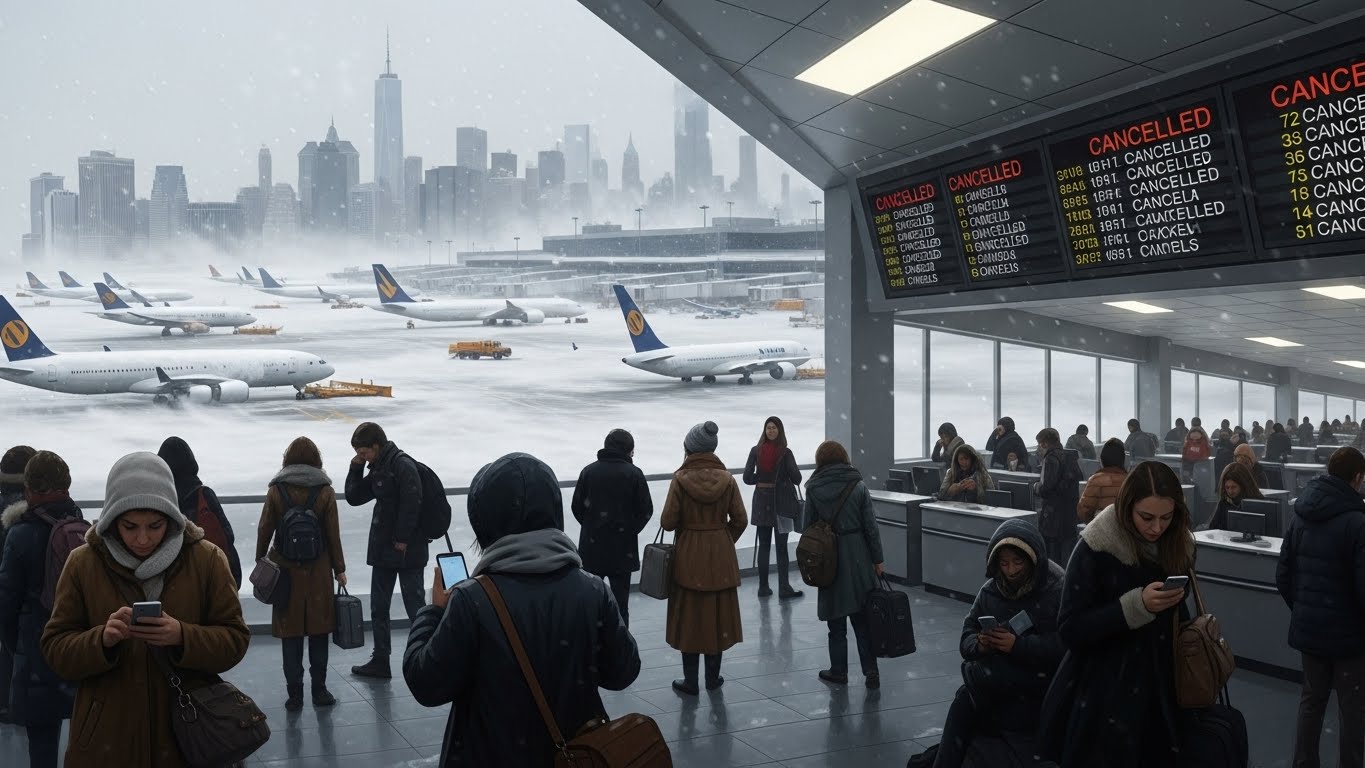
Over 900 Flights Canceled as Heavy Snowfall Brings New York City Travel to a Standstill
- Posted on: December 27, 2025
Over 900 Flights Canceled as Heavy Snowfall Brings New York City Travel to a Standstill
One of the heaviest snowstorms New York City has seen in years has severely disrupted travel, forcing the cancellation of more than 900 outbound flights and leaving thousands of travelers stranded. The storm, which blanketed the city in deep snow, caused widespread delays across major airports and highlighted the challenges of winter travel during extreme weather events.
A City Paralyzed by Snow
The snowfall began late and intensified overnight, quickly covering runways, roads, and rail lines. Visibility dropped, icy conditions spread, and airport operations slowed to a crawl. John F. Kennedy International Airport (JFK), LaGuardia Airport, and Newark Liberty International Airport were among the hardest hit, with airlines grounding flights as safety concerns mounted.
Passengers arriving at terminals were met with long lines, constant gate changes, and frequent announcements of delays and cancellations.
Impact on Travelers and Airlines
With over 900 flights canceled, ripple effects were felt far beyond New York. Connecting flights across the United States and international routes were disrupted, affecting travel plans for business travelers, tourists, and families returning home after the holidays.
Airlines worked to rebook passengers, but limited seat availability and ongoing weather concerns made recovery slow. Hotels near airports quickly filled up, and customer service centers were overwhelmed.
Emergency Response and Snow Removal Efforts
City and airport authorities mobilized snowplows, de-icing crews, and emergency teams to keep critical infrastructure running. While efforts focused on clearing runways and maintaining safety, officials urged residents and travelers to avoid unnecessary travel until conditions improved.
Transportation agencies emphasized that flight cancellations, though frustrating, were necessary to prevent accidents and ensure passenger safety.
Weather Extremes and Infrastructure Challenges
Meteorologists described the storm as one of the most intense snowfall events in recent years, raising questions about how major cities can better prepare for increasingly extreme weather patterns. As climate-related disruptions become more frequent, transportation systems face growing pressure to adapt and remain resilient.
The storm also reignited discussions about airline scheduling practices during winter months and whether contingency planning is sufficient for large-scale weather disruptions.
What Travelers Should Know
Travel experts advise passengers to monitor airline notifications closely, consider flexible travel dates, and check airport conditions before heading out. Many airlines have issued travel waivers, allowing passengers to change flights without penalty.
Looking Ahead
As the storm moves on and cleanup efforts continue, airlines and airports are working to restore normal operations. However, the aftermath serves as a reminder of how quickly extreme weather can disrupt modern travel—and how preparedness and clear communication remain crucial during such events.
For now, New York City digs out from the snow, while travelers wait for clearer skies and smoother journeys ahead.